
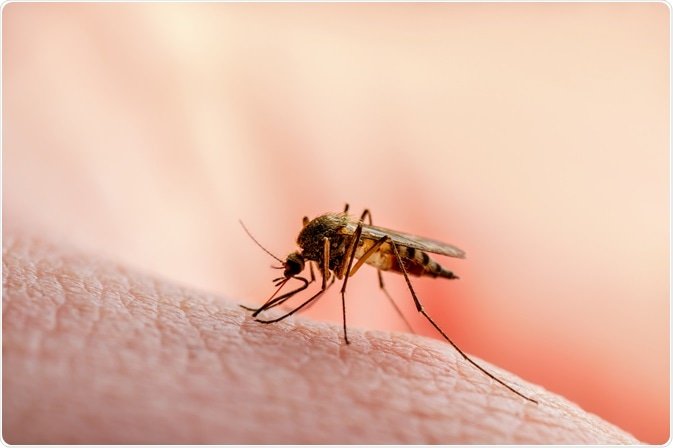
Nigeria’s fight against malaria may be entering a more dangerous phase, as scientists warn that the emergence of a new urban mosquito species alongside growing drug and insecticide resistance could reverse years of hard-won progress unless surveillance and control strategies are urgently strengthened.
The warning was issued by the Director of Research and Head of the Malaria Research Group at the Nigerian Institute of Medical Research (NIMR), Dr. Adeola Olukosi, during a presentation on molecular epidemiology research into drug-resistant malaria.
“Malaria is no longer behaving the way we used to know it. The parasite is evolving, the mosquito is adapting, and our response must evolve faster,” Olukosi said.
Dr. Olukosi revealed that her team has confirmed the presence of Anopheles stephensi, a mosquito species known for thriving in urban environments. Unlike traditional malaria vectors, the species breeds in man-made water containers, survives extreme heat, and carries genetic resistance to multiple insecticides.
“If we ignore this mosquito, malaria will no longer be a rural problem alone. Cities across Nigeria could become hotspots overnight,” she warned.
The mosquito was first identified in samples from Gombe State, and its ability to adapt to urban settings signals a potential nationwide shift in malaria transmission patterns.
Olukosi explained that molecular surveillance now plays a critical role in shaping malaria policy and treatment. Through Therapeutic Efficacy Studies (TES) conducted in collaboration with the National Malaria Elimination Programme (NMEP), her team provided evidence that led to the inclusion of dihydroartemisinin–piperaquine (DHQ) in Nigeria’s malaria treatment guidelines.
“That was science driving policy. By determining whether treatment failures are due to reinfection or true drug resistance, we can guide effective interventions,” she said.
Further studies conducted across Ebonyi, Osun, and Kwara States showed that resistance markers for sulfadoxine–pyrimethamine and amodiaquine remain low, supporting the continued effectiveness of chemoprevention programmes for children and pregnant women.
“Our data ensures that chemoprevention remains effective, protecting the most vulnerable populations,” Olukosi added.
Entomological surveillance has also revealed widespread resistance to pyrethroids, the insecticides commonly used in long-lasting insecticidal nets. According to Olukosi, this resistance is driven by both genetic mutations and complex metabolic adaptations in mosquitoes.
“Resistance is real, widespread, and mechanistically complex. Nets alone are no longer enough; surveillance and strategy must lead our fight,” she said.
NIMR is a key contributor to MalariaGEN, the world’s largest malaria genomic network, which has analyzed over 33,000 parasite samples from 122 locations across 50 years.
“Nigeria is not just a consumer of malaria research; we are shaping global understanding of drug-resistant parasites and vector evolution,” Olukosi noted.
She stressed that the combined threats of urban malaria, drug resistance, and evolving mosquito vectors pose serious national risks.
“Malaria keeps children out of school, drains household income, and weakens productivity. Every resistant parasite, every new mosquito species, is a threat to national development. Nigeria cannot afford complacency,” she said.
Olukosi announced that her December 16 presentation will highlight new surveillance strategies, fresh molecular insights into drug resistance, and the urgent need to integrate urban malaria risks into national control programmes.
“Malaria is evolving. Our science is evolving. Nigeria must evolve with it, or risk losing the gains of decades of effort,” she concluded.