
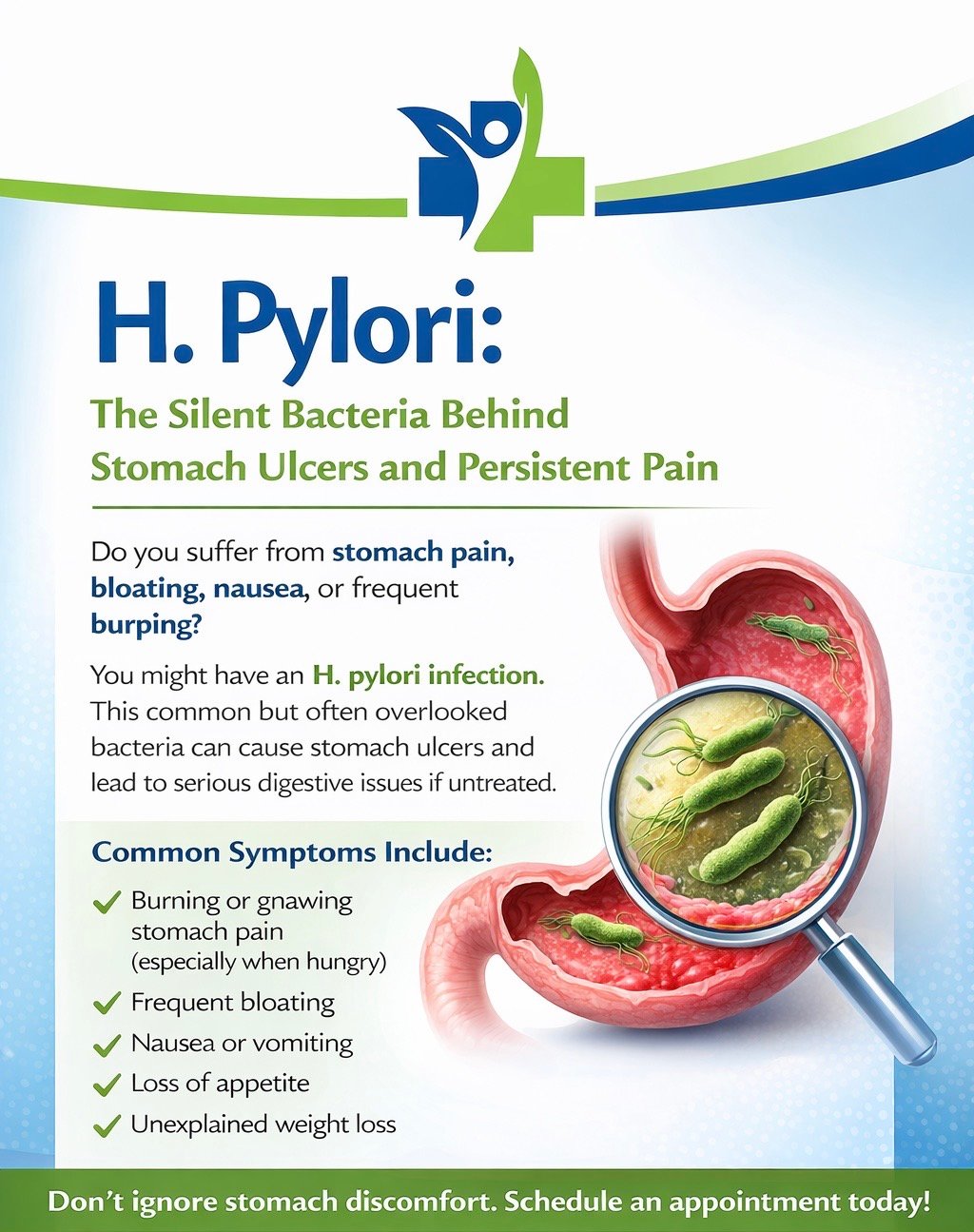
H. Pylori: The Silent Bacteria Behind Stomach Ulcers and Persistent Pain
Many people live with stomach discomfort for years burning pain, bloating, nausea without knowing the real cause. One of the most common but often overlooked culprits is Helicobacter pylori, popularly known as H. pylori.
What Is H. Pylori?
H. pylori is a spiral-shaped bacterium that lives in the lining of the stomach. It is incredibly common, especially in developing countries, and most people become infected during childhood. While some people never experience symptoms, others develop serious digestive problems.
How Do People Get Infected?
H. pylori spreads mainly through:
- Contaminated food or water
- Poor hygiene practices
- Close contact, such as sharing utensils or kissing
This is why infection rates are higher in areas with overcrowding and limited access to clean water.
Common Symptoms of H. Pylori
Not everyone with H. pylori will feel sick, but when symptoms appear, they may include:
- Burning or gnawing stomach pain (especially when hungry)
- Frequent bloating
- Nausea or vomiting
- Loss of appetite
- Frequent burping
- Unexplained weight loss
In severe cases, it can lead to peptic ulcers, internal bleeding, or even increase the risk of stomach cancer.
Why Is H. Pylori Dangerous?
H. pylori damages the protective lining of the stomach, allowing stomach acid to cause sores (ulcers). If left untreated, complications may include:
- Chronic gastritis
- Stomach or duodenal ulcers
- Anemia from slow internal bleeding
- Increased risk of gastric cancer
Early detection makes a huge difference.
How Is H. Pylori Diagnosed?
Doctors can diagnose H. pylori using:
- Stool test
- Breath test
- Blood test
- Endoscopy (in severe or complicated cases)
Treatment Options
H. pylori is treatable. Treatment usually involves a combination of:
- Antibiotics to kill the bacteria
- Proton pump inhibitors (PPIs) to reduce stomach acid
It’s very important to complete the full course of medication exactly as prescribed to prevent resistance.
Can H. Pylori Be Prevented?
Yes. Simple hygiene practices go a long way:
- Wash hands regularly with soap and water
- Drink clean, safe water
- Eat properly cooked food
- Avoid sharing eating utensils unnecessarily
When Should You See a Doctor?
If you experience persistent stomach pain, unexplained weight loss, black stools, or vomiting blood, seek medical attention immediately. These could be signs of serious complications.
H. pylori may be silent, but its effects can be severe if ignored. The good news? With proper testing and treatment, it can be completely eradicated. Paying attention to your digestive health and seeking medical advice early can save you from long-term complications.
Your stomach deserves care listen to it.