
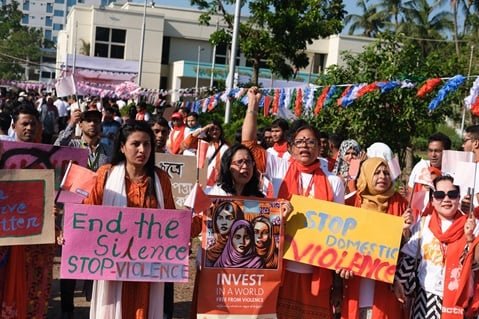
A Global Emergency Ignored: New WHO Report Reveals Alarming Stagnation in Violence Against Women
Violence against women remains one of humanity’s most persistent and most overlooked human rights crises. According to a landmark report released today by the World Health Organization (WHO) and UN partners, the world has made almost no progress in reducing violence against women in the past twenty years.
A Crisis With Devastating Scale
The numbers are staggering. Nearly 1 in 3 women worldwide about 840 million has faced physical or sexual violence from an intimate partner or someone else at some point in her life. Shockingly, these figures have barely changed since the year 2000.
In just the last 12 months, 316 million women aged 15 and older experienced intimate partner violence. That’s 11% of the global female population. The rate of progress? A painfully slow 0.2% decline per year over two decades.
For the first time, the report includes global and national estimates of sexual violence committed by non-partners. It reveals that 263 million women have been sexually assaulted by someone other than a partner since age 15 though experts emphasize these numbers are likely much higher due to stigma, shame, and fear that silence survivors.
“One of Humanity’s Oldest Injustices”
WHO Director-General, Dr. Tedros Adhanom Ghebreyesus, didn’t mince words:
“Violence against women is one of humanity’s oldest and most pervasive injustices, yet still one of the least acted upon. No society can call itself fair, safe or healthy while half its population lives in fear.”
He stressed that behind every number is a real woman or girl whose life has been altered forever. True development, he insisted, cannot happen without dignity and safety for women and girls.
Funding Falling as Needs Rise
The report released ahead of 25 November, the International Day for the Elimination of Violence Against Women and Girls represents the most comprehensive analysis of violence against women to date.
It reviewed data from 168 countries between 2000 and 2023 and paints a devastating picture: while the crisis deepens, global funding is shrinking.
Despite clear evidence on how to prevent violence, only 0.2% of global development aid in 2022 went to programmes addressing violence against women. Funding has dropped even further in 2025, leaving millions of women and girls at greater risk, especially in humanitarian, conflict, and climate-vulnerable settings.
Violence Starts Early and Lasts a Lifetime
Women and girls face lifelong consequences:
- Unintended pregnancies
- Higher risk of sexually transmitted infections
- Depression and long-term mental health challenges
Sexual and reproductive health services remain critical entry points for survivors to access care.
The report highlights that violence begins alarmingly early. Within the last year alone, 12.5 million girls aged 15–19—about 16% experienced violence from an intimate partner.
And some regions are facing an emergency of their own. In Oceania (excluding Australia and New Zealand), intimate partner violence prevalence in the past year stands at 38% over three times the global average.
Where Progress Is Happening
Despite the grim statistics, some countries show that progress is possible when political will exists.
- Cambodia is updating domestic violence laws, expanding shelters, improving services, and using digital tools to strengthen prevention.
- Ecuador, Liberia, Trinidad and Tobago, and Uganda have created costed national action plans, investing local resources into the fight against gender-based violence.
These efforts show that change is possible when leaders commit to it.
A Global Call for Action and Accountability
The WHO and UN partners stress that ending violence against women requires decisive leadership, funding, and systems that centre survivors. The report calls on governments to:
- Invest in evidence-based prevention programmes
- Strengthen survivor-focused health, legal, and social services
- Improve data collection systems, especially for marginalized and at-risk groups
- Enforce laws that protect and empower women and girls
Alongside the report, the UN also launched the second edition of the RESPECT Women framework, providing updated guidance for countries including those in humanitarian settings on preventing violence effectively.
Voices From Partner Agencies
Dr Sima Bahous, UN Women
“Ending violence against women and girls requires courage, commitment, and collective action. Advancing gender equality is how we build a safer, more equal world.”
Diene Keita, UNFPA Executive Director
“Violence is compounded by discrimination—poverty, disability, and other barriers deepen the risk. The cycle of abuse devastates families and communities. This must change now.”
Catherine Russell, UNICEF Executive Director
“Many women first experience violence as adolescents. Many children grow up watching it happen to their mothers. We must break this cycle.”
The Reality Behind the Data
The report Global, regional and national prevalence estimates for intimate partner violence and non-partner sexual violence, 2023 was developed by WHO and multiple UN agencies. Despite extensive modelling, the authors emphasize that all surveys underestimate violence, especially sexual violence, due to stigma and flawed data collection in some regions.
Violence against women is universal but far from equally distributed. In least-developed nations, conflict zones, and climate-fragile regions, women carry the heaviest burden.
No More Silence
The message is clear: the world has waited too long already. Progress is possible but not without transformative commitment, stronger funding, and unwavering political will.
Ending violence against women and girls is not just a policy decision. It is a human obligation. It is justice. It is dignity. It is humanity.