
Fiber is an essential part of a healthy diet, yet many people don’t get enough of it. This powerful nutrient plays a major role in digestion, heart health, blood sugar control, and overall wellbeing. But how much fiber should you actually eat each day?
What Is Fiber?
Dietary fiber is a type of carbohydrate found in plant-based foods such as fruits, vegetables, whole grains, legumes, nuts, and seeds. Unlike other carbohydrates, fiber is not fully digested by the body. Instead, it passes through the digestive system and supports several important bodily functions.
There are two main types of fiber:
Soluble fiber – dissolves in water and helps lower cholesterol and control blood sugar levels.
Insoluble fiber – adds bulk to stool and helps food pass more easily through the digestive tract, preventing constipation.
Both types are important for maintaining good health.
Recommended Daily Fiber Intake
Health experts recommend different fiber intake levels depending on age and gender.
- Women: About 25 grams per day
- Men: About 30–38 grams per day
- Children and teenagers: Between 19–25 grams per day depending on age
Unfortunately, many people consume far less than these recommendations, often averaging only 10–15 grams per day.
Benefits of Getting Enough Fiber
Eating enough fiber can provide several important health benefits:
1. Improves Digestion
Fiber helps keep the digestive system running smoothly and prevents constipation.
2. Supports Heart Health
Soluble fiber helps reduce “bad” cholesterol levels, lowering the risk of heart disease.
3. Helps Control Blood Sugar
Fiber slows the absorption of sugar in the bloodstream, which can help prevent spikes in blood sugar levels.
4. Promotes Healthy Weight
High-fiber foods keep you feeling full longer, which can help reduce overeating.
5. Supports Gut Health
Fiber feeds beneficial gut bacteria that play a key role in immunity and digestion.
Good Sources of Fiber
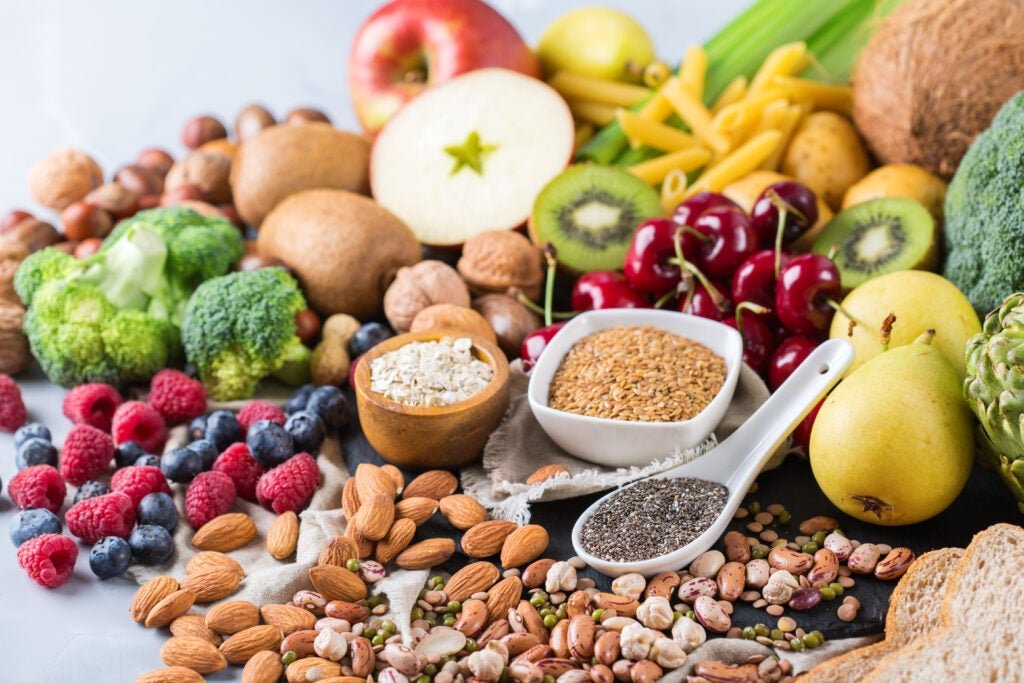
To increase your fiber intake, include more of these foods in your daily meals:
- Whole grains like oats, brown rice, and whole wheat bread
- Fruits such as apples, bananas, oranges, and berries
- Vegetables like broccoli, carrots, and leafy greens
- Legumes such as beans, lentils, and chickpeas
- Nuts and seeds including almonds, chia seeds, and flaxseeds
Tips for Increasing Fiber Intake
If your current fiber intake is low, increase it gradually to avoid bloating or discomfort.
- Add fruits or vegetables to every meal
- Choose whole grains instead of refined grains
- Snack on nuts, seeds, or fresh fruit
- Drink plenty of water to help fiber move smoothly through the digestive system
Fiber is a simple but powerful nutrient that supports digestion, heart health, and overall wellness. By including more whole, plant-based foods in your meals, you can easily meet your daily fiber needs and improve your long-term health.
A healthy diet is one of the best ways to protect your body. Small changes today can lead to better health tomorrow.